In Conversation with MJ Anderson-Hyde – Vestige
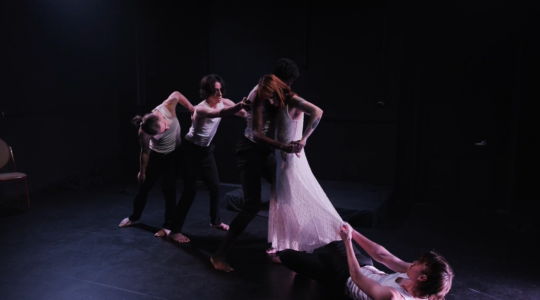
In this edition of In Conversation, we shine a light on Vestige—a new project by MJ Anderson-Hyde / Miss Phoria, that recently had a residency at The Blue Room Theatre from 7 – 24 April. Vestige explores breaking down the rigid binaries of society and toxic masculinity, whilst embracing vulnerability as a pathway to healing, both individually and collectively. Through raw, physical storytelling, Vestige paints an intimate picture of the damage this cycle causes and calls for dismantling these patterns. At its core, this project is a journey of self-discovery and reconciliation that challenges the audience while being a relatable story with the essence of hope. We caught up with MJ Anderson-Hyde to dive into the creative process behind the project and how the residency went.
What inspired you to apply for the residency at The Blue Room Theatre, and what goals did you have going into it?
I was inspired to apply for the residency after I spoke with Joel Evans, who reached out to me with interest in my work as a performer. He informed me of the program and encouraged me to apply, as he felt my work would be a good fit for this kind of space.
I took his advice and applied with a project I had been working on in the background of my career for over a year. It was ideal for the program as it was not yet developed and required support to begin creating it. I have always been a supporter of The Blue Room Theatre and felt that it is an ideal space for my work, as it is community based and presents work that is not always given a spotlight on commercial stages.
My goals were as follows:
- Take the draft work for my project and develop it into something ready for pitching to theatre spaces.
- Further my skills and knowledge in producing for theatre spaces.
- Create meaningful connections and networks with people in the community and industry.
- Gain access to resources and support that I can utilise to develop my work further and get to the next milestone in the project’s timeline.
- Work more with The Blue Room Theatre and be more engaged with their programs/work for future opportunities.
How would you describe your overall experience during the residency?
Absolutely amazing. I would not have been able to get my work to this next milestone of development without the support of this residency. I believe I utilised the opportunity given to me to its full potential and gained as much from it as I possibly could. I was able to create a 1-hour preview show from my time in the residency and felt supported by The Blue Room Theatre the entire time. My experience felt empowering, helpful, useful, safe, encouraging, supportive and enjoyable.
What are some of the most valuable lessons, discoveries, or skills you’ve gained during this time?
- Furthered my skills in creating work in a theatre setting/space.
- Furthered my skills in organisation, from a production perspective and overall knowledge in technical procedures.
- I discovered a deeper love, passion and understanding for theatre spaces, which only drove me to work towards furthering my career in this space.
- I discovered new ways to navigate theatre spaces when it comes to communication, relationship and network building, technical processes, accessibility, presentation and preparation.
How has this residency impacted your practice or shaped your perspective as an artist?
This residency has deeply impacted me as an artist and creator. I have found that it inspired me to continue creating work in the theatre space, and to continue developing this specific project to get it onto stages. It has impacted and grown my practice in a positive way, I have found new ways to adapt my work and share it with audiences. I have also been inspired in general to keep working on my craft and bringing it to theatre spaces, as it feels valuable and important.
What are your next steps following the residency—will you continue developing the work, or are you moving into something new?
I will absolutely continue to develop this project, I have already been applying for any programs or grants I can find. I will also be making sure to apply for The Blue Room Theatre’s Annual Season 2027, as I believe it would be wonderful and a testament to The Blue Room Theatre’s work, to bring a production to their stage that was previously part of one of their residencies.
How did the support and environment at The Blue Room Theatre contribute to your creative process?
I always felt supported by The Blue Room Theatre team. I knew if I had any issues, questions or concerns, that I could speak to the team and I would be supported. I always had all the information I needed and could focus on my work without any added stress. It helped me to be more creative in my process, knowing The Blue Room Theatre was there to help wherever needed.
What does being part of the Perth arts scene mean to you, and what do you think needs to evolve to better support local artists?
Being part of Boorloo’s arts scene is my lifeline. It is my livelihood and my passion. Practicing arts is how I survive and feels like my purpose. I believe we have such a vibrant community of artists and that should be nurtured as much as possible.
I think the areas that need to be improved in our arts scene are:
- More representation and opportunities for BIPOC, First Nations and Disabled artists.
- More space for truth telling and storytelling, for lived experiences and identities that don’t get shared as much.
- More funding for community, grassroots and independent artists and organisations.
- More support for artists in their practice, development and growth.
- More accessibility procedures, protocols and standards for the arts scene. Not only in spaces/venues, but in process and practice as well. For Disabled folks, First Nations folks, Trans/GNC folks, Neurodivergent folks, as well as people with CPTSD & Trauma.
Image by xxxx