In Conversation with Josie Walsh – Red Ticket
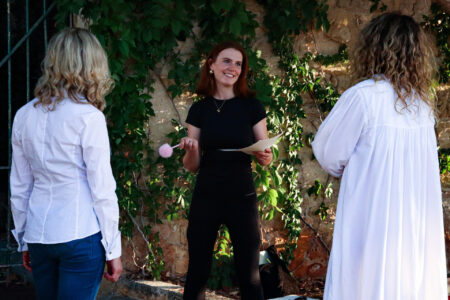
In this edition of In Conversation, we shine a light on Red Ticket—a new play by Josie Walsh, premiering at The Blue Room Theatre from 7 to 18 April. Bold, atmospheric and deeply psychological, Red Ticket exposes the fine line between madness and misogyny. Inside the walls of the former Fremantle Lunatic Asylum, where echoes of confinement still linger, a new psychological thriller asks an unsettling question: who decides when a woman has lost her mind? We caught up with Josie Walsh to dive into the creative process behind the work and what audiences can expect from this thrilling new production.
What motivated you to apply to be part of The Blue Room Theatre’s 2026 season, and what drew you to this project?
I have always loved watching The Blue Room Theatre shows and have always wanted to be involved in one. I had heard from many theatre makers that The Blue Room Theatre provides such a great experience for emerging creatives to get their foot in the door, supporting them to create important work.
I graduated last year from Curtin University, studying Theatre Arts. I had already gone through two developments for Red Ticket while at university and had great success, and so I thought I may as well just go for it, applied for The Blue Room Theatre and see if I get in! I’m so thankful that I did.
The idea for Red TIcket first came about as part of a project for university. We had to research the history of Fremantle, which is how I learned about the extraordinary history of The Walyalup / Fremantle Arts Centre, which was originally used as a lunatic asylum. The stories I researched moved and outraged me, and I felt a deep responsibility to tell them. The third most common reason women were institutionalised was for puerperal insanity, now known as postpartum depression. The stories about these women sparked the idea for Red Ticket, and the more I researched, the more the story took shape.
Red Ticket explores the condition of postpartum psychosis. This topic also resonated with me on a personal level, as two of my family members have experienced psychosis and spent time in psychiatric wards. My passion for this subject stems from these personal connections, giving me a unique understanding and sensitivity toward these issues. Through Red Ticket, I aim to challenge the stigma surrounding mental illness, which I’ve both felt and witnessed firsthand.
What has stood out to you during the rehearsal process, any unexpected discoveries or moments of growth?
In the previous developments of Red Ticket, we mainly explored the isolation of the two women a century apart. While still exploring the isolation, we discovered, within rehearsals, the evolution of the relationship between Lily and Poppy. Emphasising that the story isn’t simply about a ghost haunting another, but focusing on the two women’s shared connection, one filled with empathy and understanding.
Another discovery we made in rehearsals was the topic of shame and the similarities and differences in how it shows up in the two women’s lives. Both women struggle with the shame from their post-natal mental health conditions, not feeling like they can fulfil their role of being a mother. However, the external pressures from the society they live in differ, which, in turn, leads to the shame manifesting differently. Lily’s external pressures are rooted in a society that has a hundred and one different infant classes and groups, encouraging independence while holding high expectations on mothers to do it all, prioritising their career and prioritising their kids, but forgetting about their mental wellbeing through it all. Poppy’s shame roots from living in a society that only allows her to be a mother and a wife, while also demonising women who struggle with their mental health and/or role as a mother.
How has the collaboration with your cast, crew, and creatives shaped the work and your vision for it?
I am fortunate to work with an incredibly talented and passionate team. I worked on the script with my mentor/dramaturg Vivienne Glance. She gave me great feedback, which, in turn, created a more authentic voice and a gripping narrative. I changed scenes around, and really leant into describing physical sensations in the monologues. Isla, my assistant director, has been a great support throughout this process, offering feedback and amazing ideas, especially on the staging/movement side of the performance. Isla choreographed the beautiful movement sequence within the show. Red Ticket incorporates visual art, shadow work, contemporary dance movement, music, and both naturalistic and poetic dialogue that unfold in the play.
I explained my vision to the design team, and they have delivered beyond my expectations. Setare created the perfect ominous shadow world of Poppy, the spirit of a former patient at the asylum. Topaz’s lighting alternates between the harsh, bright reality of daily life and the dreamlike, eerie world of Lily’s psychosis. Zoe, our sound designer and composer, has created a haunting soundscape that enhances the play’s ghostly, tense atmosphere. I also collaborated with our visual artist, Ez, who created the beautiful artwork of magpies within the show. The design of this production has brought the play’s world to life exactly as I had imagined it. The dedication and passion from our cast have also been vital in creating the show that it is today. Krysia, playing Lily, has created a compelling portrayal of a new mum struggling with her mental health. Kate playing Poppy has harnessed the perfect balance between creating a three-dimensional, authentic voice while still holding onto the ghostly element of her character. Hannah’s portrayal of Janice has created a really funny, genuine, and overbearing character. Through these collaborations, Red Ticket became a fully realised production, shaped by the collective creativity of everyone involved. I look forward to developing this work further with my creative team.
What does having your show programmed in The Blue Room Season mean to you as a lead creative?
It is such an honour. My entire design team are Curtin Theatre Arts’ graduates, so it has been a great area of growth for all of us, working outside of university and collaborating with industry professionals within The Blue Room Theatre team as well as with Vivienne Glance. With over 20 years of experience working in the industry, as an experienced actor, playwright and dramaturg, there has been so much knowledge gained working with her. This experience has improved my writing and directing skills to create my first full-length show, which will be a great kickstart for my team’s career in the theatre industry. It will also be a great opportunity to collaborate with artists from other disciplines, such as Eza Garciano, an emerging visual artist who created artwork for the show and Melissa Domiati, an award-winning poet who led a poetry night supporting the show.
As you move closer to opening, what are you most excited—or even nervous—about sharing with audiences?
I am very excited to immerse the audience in an important story and showcase the skills of our incredible actors and design team. I hope audiences leave the theatre feeling less alone, knowing that help is out there. There is no need to feel shame for struggling with your mental health. I want Red Ticket to help destigmatise mental health conditions like psychosis and start conversations with the audience about their own mental health. As well as present mothers with the opportunity to open up to their loved ones about their maternal struggles.
What is your show bringing to the Perth arts scene, and what do you think would help strengthen the local arts ecosystem?
I think this show shines a light on a little-known history of the Walyalup / Fremantle Arts Centre. I believe this story needs to be explored and will enrich the community in its telling. Many people are not aware of the Walyalup / Fremantle Arts Centre’s history, and I believe the women who suffered in the Fremantle Lunatic Asylum deserve to have their stories told.
This play is relevant as 1 in 8 mothers are diagnosed with Postpartum Depression. The show looks at how far we have come as a society in treating mental health, while also acknowledging the work that still needs to be done to destigmatise these illnesses. As long as the stigma towards mental health exists, I believe this story will be relevant and resonate with many.
Red Ticket was also supported by a community poetry afternoon led by International Educator and Wellness Poet Melissa Domiati and Lakshmi Kanchi. The workshop explored the complexities of motherhood, mental health, and life’s unexpected twists.
I think creating more opportunities within the community for emerging artists to gain skills and meet other creatives and mentors, as well as more chances to collaborate with different disciplines, would really help strengthen the local art ecosystem. More funding in the arts, such as grants, is also an important step towards encouraging emerging artists to create, as with the cost of living crisis, many have to choose between their craft and other work.
Image by Fiona Dent